Two Ways of Knowing a Plant
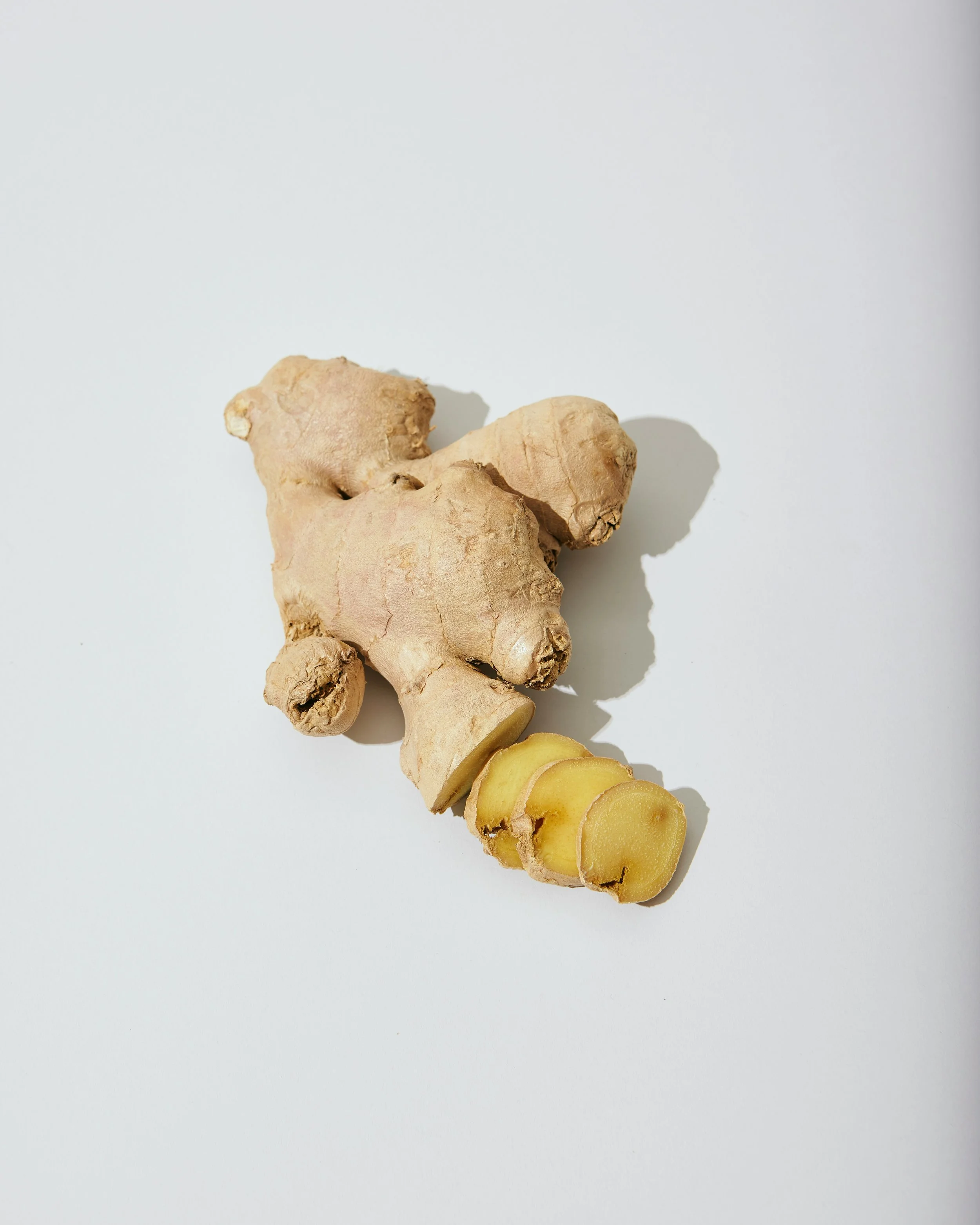
A piece of ginger root sits on your cutting board. To one tradition, it's warming and pungent, useful for a cold stomach or a chest that needs opening. To another, it's Sheng Jiang, an herb that disperses cold and moves the body's own Qi. Both descriptions are true at once, two people looking at the same plant from two different distances, and this whole course is about how to hold both views and their benefits. Welcome to The Green Wheel.
What Western Herbalism Actually Is
Western herbalism is not a single system. It's centuries of overlapping folk knowledge, most of it built the way any home remedy gets built: someone was sick, something helped, and the story got passed down. Underneath that patchwork, though, sits a real, coherent set of ideas worth knowing.
Herbs are often described by their energetics, whether a plant runs hot or cold, dry or damp. A warming herb like ginger or cinnamon moves circulation and stimulates digestion. A cooling herb like peppermint or chamomile calms inflammation and eases an overheated system. This functions as a working diagnostic language, still used by practicing herbalists today to match a plant to a person's actual state, not a diagnosis written on paper.
Western herbalism also carries an old idea called the doctrine of signatures, the belief that a plant's shape, color, or growing habit hints at what it's good for. Walnut, shaped like a brain, was historically used for head and nerve complaints. Lung-shaped leaves like mullein got used for the chest. Modern herbalists tend to treat the doctrine of signatures as a memory tool and a way of really looking at a plant closely, and not as literal proof, but it's worth knowing because it shows up constantly in why certain plants earned certain reputations in the first place.
Modern herbalism increasingly sits alongside clinical research too, adding a second layer on top of the older energetic language. A plant like elderberry, long used for the chest and immune system on nothing but generations of experience, now has real clinical study behind some of that traditional reputation. This course draws on both layers, the old energetic reading of a plant and whatever real research exists behind it, since neither one on its own tells the whole story.
Real history matters here too. Much of what's now called Western herbalism traces back through Greek and Roman humoral medicine, medieval European folk healers, and the wave of scientific herbalism that followed. Figures like Nicholas Culpeper, whose seventeenth-century herbal is still referenced today, and Hildegard von Bingen, a medieval abbess who wrote extensively on plant medicine centuries before modern botany existed, are part of that same lineage.
What TCM & Daoism Teach
Traditional Chinese Medicine and the Daoist philosophy underneath it work from a different starting point entirely: the body is a small working model of nature, not something separate from it.
Qi is the central idea, usually translated as vital energy or life force, though neither translation fully captures it. Qi moves through the body along channels the way water moves through a landscape, and health, in this framework, is largely a question of whether that movement is flowing freely or stuck somewhere.
Qi is actually one of three related treasures TCM and Daoism track together, known as the Three Treasures, or San Bao. Jing, essence, is the deepest and most physical of the three, the body's foundational reserve, part inherited at birth and part built slowly through diet, rest, and how a life actually gets lived. It's associated with the kidneys, and it governs growth, reproduction, and the pace of aging. Qi sits in the middle, the day-to-day movement and function built from that deeper reserve, spent and rebuilt continuously. Shen, spirit, is the most refined of the three, housed in the heart, governing mental clarity, presence, and a settled, undisturbed mind.
A common teaching image describes all three as different densities of the same underlying substance: Jing as ice, dense and slow-moving. Qi as water, active and flowing. Shen as vapor, the most subtle and least physical of the three. Depleted Jing eventually shows up as low Qi. Disturbed Qi eventually unsettles Shen. This course focuses mostly on Qi, since that's the layer herbs and food most directly touch, but Jing and Shen are worth knowing by name now, since each one becomes its own season's central focus later in the year.
Yin and Yang describe two halves of any whole, always in relationship, never fixed. Yin is cool, still, inward, associated with rest and the body's deep reserves. Yang is warm, active, outward, associated with movement and function. Illness, in TCM, often gets read as one side pulling too far out of balance with the other.
The Five Elements, Wood, Fire, Earth, Metal, and Water, map onto organs, emotions, seasons, tastes, and colors, a genuinely elegant system for reading the body as something that actually changes with the year, not fixed the same way for all twelve months. This course leans on that mapping directly, tying each season's own material to its own element and organ pair.
Each element carries its own organ pair, never just one organ working alone. Wood governs the liver and gallbladder. Fire governs the heart and small intestine. Earth governs the spleen and stomach. Metal governs the lungs and large intestine. Water governs the kidneys and bladder. Each element also carries an emotion, a taste, and a direction the body's energy tends to move in that particular season, all of which this course returns to as the actual working content for each seasonal module.
Daoism sits underneath all of this as the actual philosophy, closer to a way of living in step with a world that's always moving than a religion in the Western sense. Yang Sheng, the Daoist practice of nourishing life, comes back in every module of this course, since it's the part of this tradition built most directly for daily practice, not just theory.
Two Lenses, One Plant
Go back to that piece of ginger. In Western herbalism, ginger is warming and stimulating, good for poor circulation, nausea, and a sluggish digestion, its heat read as a direct physical effect on the body's tissues.
In TCM, that same root is Sheng Jiang, classified as warm and pungent, used specifically to disperse external cold before it settles deeper into the body and to warm the middle burner, the stomach and spleen's own digestive fire. What changes is the lens, never the plant itself.
Both traditions are describing something literal, a real, working relationship between a plant and a body, built from centuries of people paying close attention and passing down what worked. This course asks you to hold both descriptions side by side, treating neither as more scientific or more authentic than the other, because the plants themselves never asked to be sorted that way.
The same pattern holds for nearly any plant this course will cover. Chamomile, in Western herbalism, is a gentle nervine and digestive relaxant, cooling and calming to an irritated system. A close TCM analog gets read as cooling as well, used to settle an agitated Shen, the mind or spirit housed in the heart. Different vocabulary, same basic observation: a plant that calms an overactive system, described by two traditions that never spoke to each other directly but arrived at strikingly similar conclusions on their own.
General Safety and Sourcing
Real herbal knowledge comes with real responsibility, so a few ground rules before this course goes any further.
Herbs can interact with medications, sometimes seriously. St. John's Wort and blood thinners, licorice root and blood pressure medication, are two of the more well-documented examples. Nothing in this course replaces an actual conversation with a doctor or pharmacist, especially if you're on prescription medication or managing a chronic condition.
A few categories of herbs deserve extra caution beyond straightforward drug interactions. Pregnancy and breastfeeding rule out a real number of otherwise common herbs, since what's gentle for one body isn't automatically gentle for a developing one. Autoimmune conditions can make immune-stimulating herbs, astragalus among them, worth a conversation with a doctor first, not an assumption that more immune support is automatically better. The goal here is real practice, the kind that comes from learning a tradition correctly, not a reason to feel intimidated by any of it.
Sourcing matters as much as the plant itself. Buy from suppliers who test for contamination and identify their herbs correctly, since misidentification is a real risk in both Western and Chinese herb markets. Look for organic certification or a clear statement of wildcrafting practices on anything you buy, since that's usually the fastest signal a supplier takes sourcing seriously. If you forage anything yourself, harvest sustainably: never take more than a third of a wild patch, and be genuinely certain of an identification before it goes anywhere near your body.
Know the line between home herbalism and medical care too. A cup of chamomile tea for a mild stomach upset is home herbalism. A persistent cough, an unexplained symptom, anything that lingers past a week or two, belongs with a professional. This course teaches traditional use and real plant knowledge, not diagnosis or treatment of disease, and the same line applies to you, for yourself or anyone else.
What This Season Asks of You
Autumn belongs to Metal, and Metal belongs to the lungs and the large intestine, the organs of taking in and letting go. It's a fitting season to open the whole year with, since the course itself is asking you to take in two traditions at once and let go of the instinct to pick just one.
Module Two moves into the season's actual materia medica, eight plants that belong to Autumn specifically, each one profiled through both Western and TCM eyes. Module Three turns to mushrooms and superfoods, reishi and tremella chief among them, and the Daoist idea of food itself as medicine. Module Four goes underneath the physical entirely, into folklore, plant energetics, and flower essences. Module Five brings all of it together into an actual daily practice for the season, teas, a small ritual or two, and the Daoist principles for living well through Autumn specifically.
What it actually requires is the same thing every module in this course will keep asking for: real attention, paid to a real plant, read through more than one set of eyes, with no prior knowledge of either tradition needed to start.
Practices:
The Two Questions - Pick one plant already in your kitchen, ginger works well here. Research two separate questions: what does Western herbalism say this does, and what would TCM call its temperature and its direction of movement. Write both answers down side by side.
Reading a Label - Next time you buy any herbal product, tea, tincture, capsule, actually read the label before you use it. Where was it grown. Who tested it. Does the company say anything about how the plant was identified. This is a small practice in treating an herb as a real, sourced thing, not an anonymous product.
The Sourcing Check - Pick one herbal product already in your home and actually research where it came from. Is there a country of origin listed. A certification. A harvest date. If none of that information exists anywhere on the packaging or the company's website, that's useful information too, about how seriously that particular brand treats sourcing.
Journal Prompts
Before this module, did you already lean toward one tradition, Western or Eastern, without quite realizing it?
What does it feel like to hold two different explanations for the same plant, with neither one needing to be more correct?
Where in your own life do you already practice something like Yin and Yang, an intuitive sense of when to rest and when to act?
What's one plant you've used your whole life without ever actually learning anything real about it?
What would it mean to treat your own body as something that changes with the seasons, the way this course treats the lungs as Autumn's particular organ?
Optional Reading and Resources
The Way of Herbs by Michael Tierra. Works directly across Western and Chinese herbalism, the same approach this course takes, useful as a broader reference once the plant profiles in Module Two get underway.
The Web That Has No Weaver: Understanding Chinese Medicine by Ted Kaptchuk. The standard, accessible introduction to TCM theory for a reader with no background in it, a good companion to the Qi, Yin and Yang, and Five Elements material in this module.
Rosemary Gladstar's Medicinal Herbs: A Beginner's Guide by Rosemary Gladstar. A grounded, practical entry point into Western herbalism specifically, useful if this module's Western half is newer territory than the TCM half.
A note about this first module: this Foundations module is the shared starting point for all four seasons of The Green Wheel. You'll see it again, refreshed for that season, at the start of Winter, Spring, and Summer's courses too, each time grounding you in the same two traditions before that season's own plants take over.