November Community Card Reading:
The Quiet Between
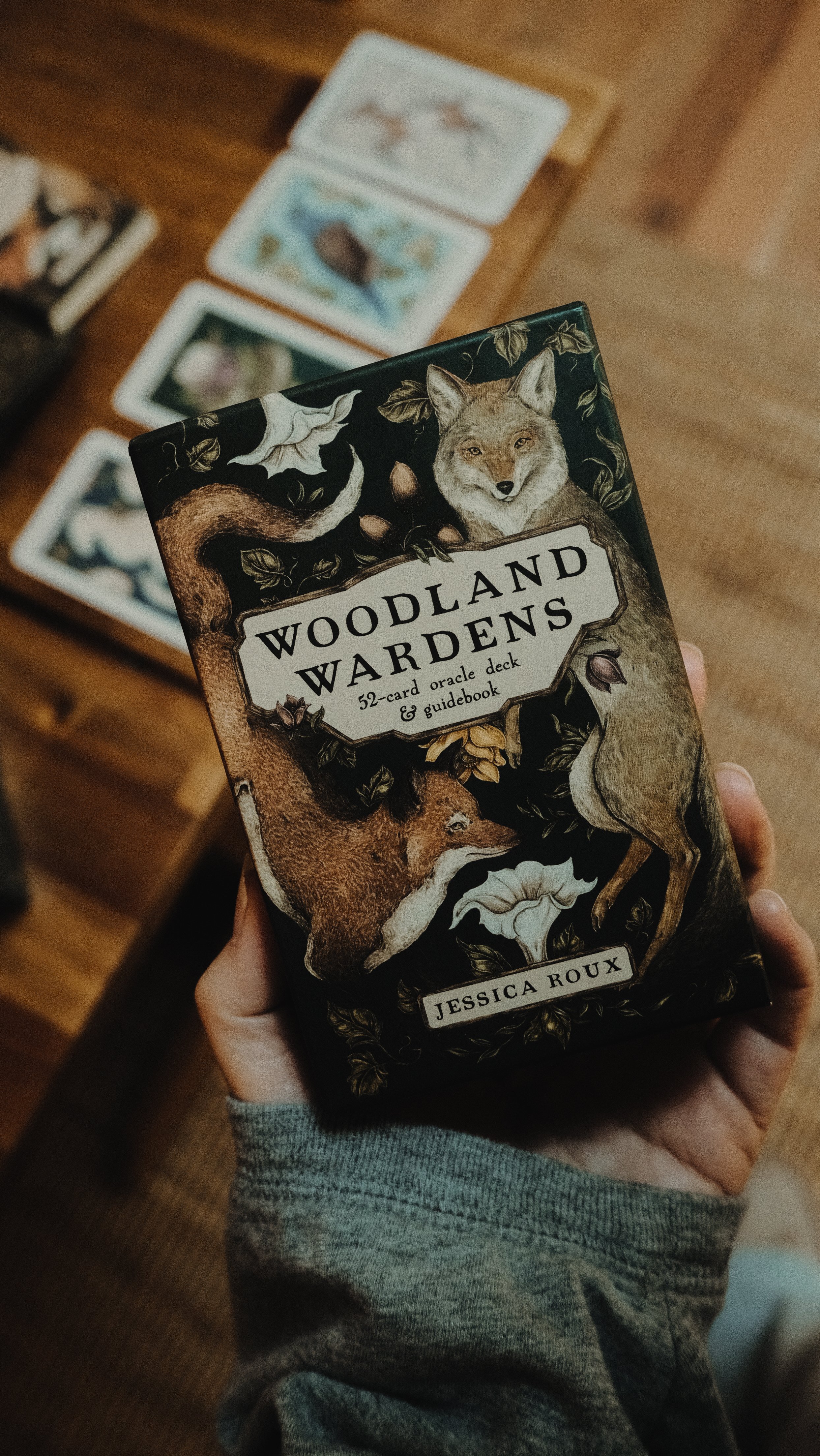
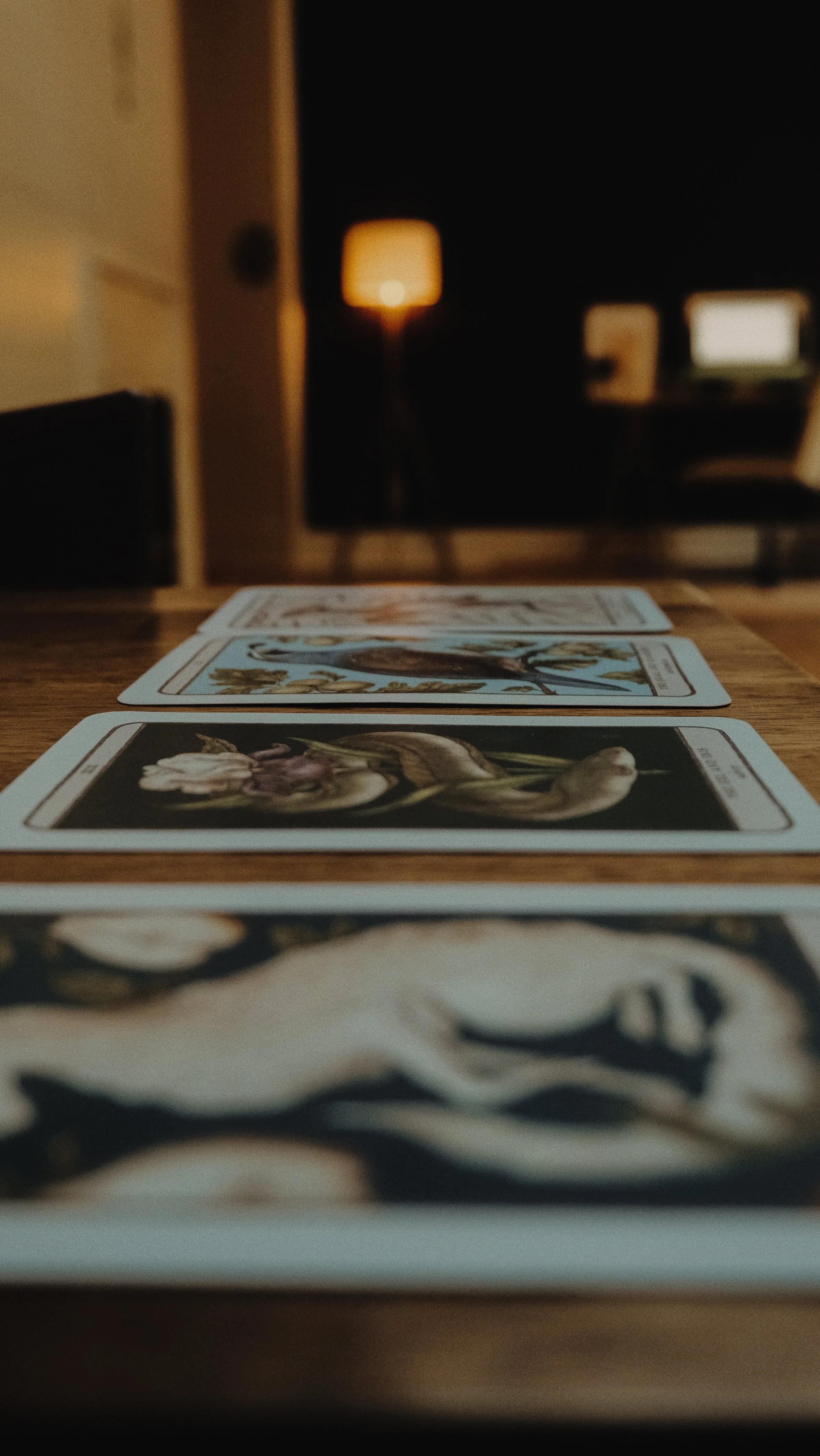
November is the month nobody plans for. Samhain has passed, the holidays are still a few weeks off, and the days run short and soft at the edges. I've come to love it for exactly that. For this reading I reached for a different deck, Woodland Wardens by Jessica Roux, where every card pairs an animal with a plant, and pulled four cards. They speak to what these hushed weeks are making room for, the slow work worth carrying into winter, and what your body is asking for before December arrives.
Question 1: What is the Quiet Between asking me to make room for this November?
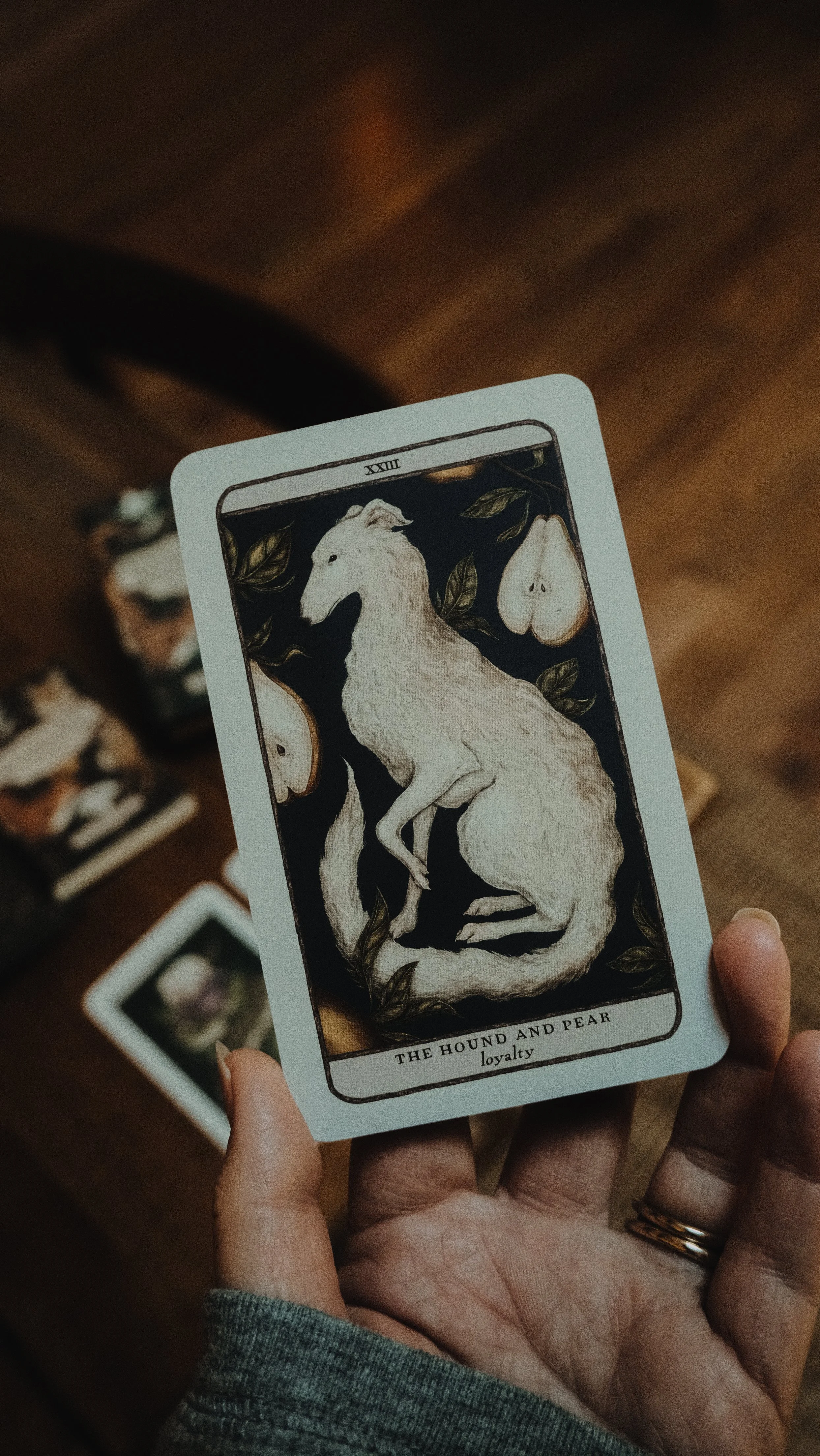
Card: The Hound and Pear.
This card tells the legend of Guinefort, the greyhound killed by mistake after saving a baby from a snake. In the 1200s a traveling friar, Stephen of Bourbon, found that mothers in the Dombes region of eastern France were bringing their sick babies to the hound's grave, a well inside a grove of trees planted in his memory, and leaving salt there as an offering. Stephen had the grove cut down. People kept coming anyway, and traces of the custom were still being recorded centuries later. A village held on to a dog's faithfulness long after anyone told them to stop. And the pear has its own patience: most European pears are picked while still hard and finish ripening in a bowl on the kitchen counter.
So the room November is asking you to make is room for your people. Quiet weeks have a way of filling up with chores and catching up, and this card turns you toward the friends who have stood by you, the ones you might be saving for a holiday visit or a "when things calm down." Let things be calm now. Call the friend you keep meaning to call. Walk with someone, or bring a pot of soup to a door you haven't knocked on in a while. Friendship ripens the way the pear does, slowly and indoors, in plain weeks like these, and it bruises if it's left too long without care.
Question 2: What slow work is ready to be picked up and carried through the winter?
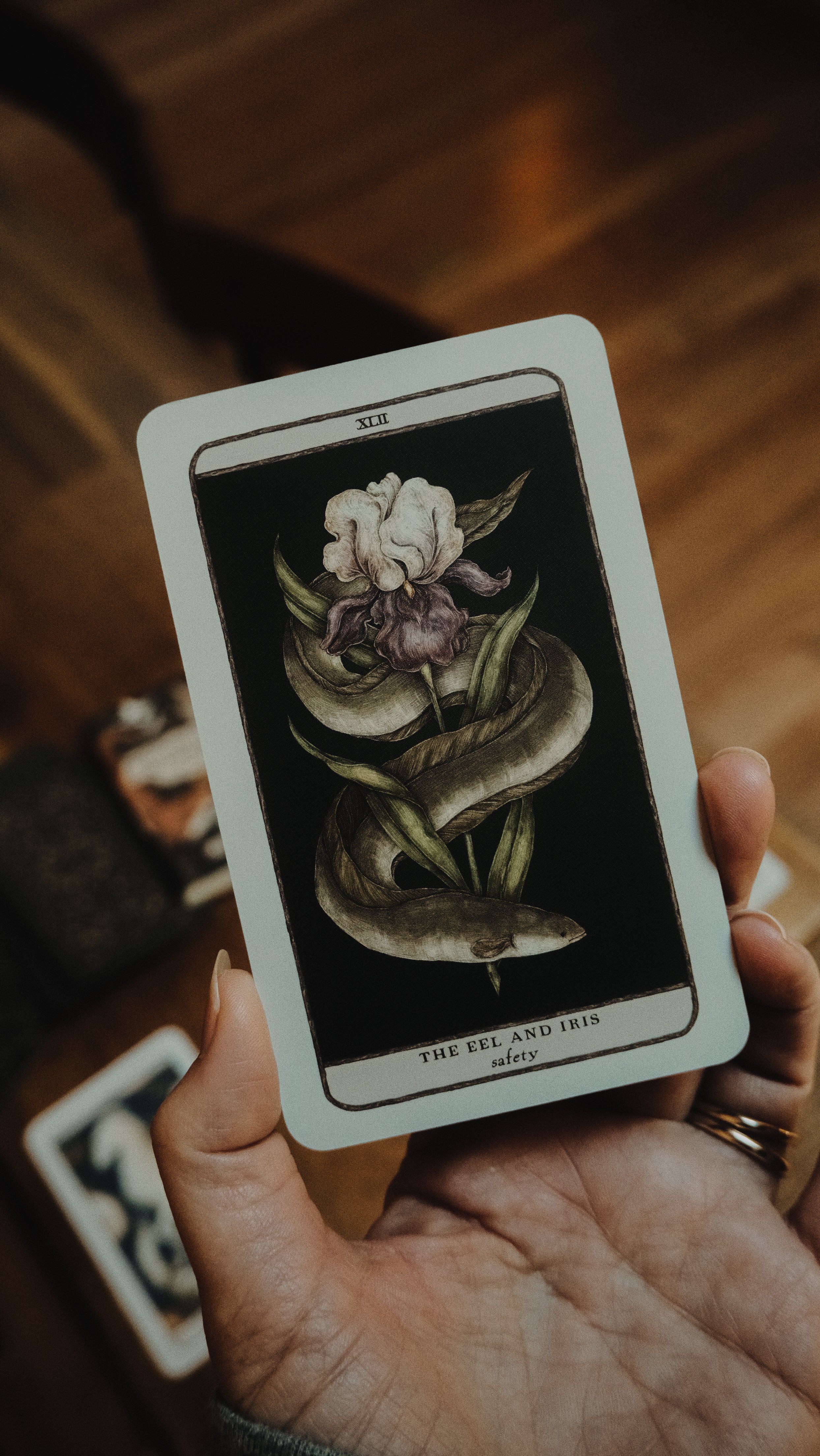
Card: The Eel and Iris.
European eels live a very long, very patient life. They can spend many years in a single river or pond, growing slowly and keeping to the mud, until one autumn on a dark night they slip downstream to the sea and swim thousands of kilometers to the Sargasso Sea, south of Bermuda, to spawn. The iris works on its own long timeline too. Most garden irises grow from thick rhizomes lying just under the surface of the soil, and the clump widens a little each year until one day you notice it has claimed a whole corner of the garden.
The slow work here is building safety, in your home and in yourself, and the card is clear that boundaries are part of it. I read that as a winter-long practice: a boundary that grows the way an iris clump grows, a little wider and a little steadier each week. Maybe it's an evening hour that stays yours through the busy season. Maybe it's saying yes to fewer gatherings. Like the eel, you're allowed to stay close to home and grow strong where you are for a while. The journey will come when it's time.
Question 3: What am I most ready to give thanks for, and who needs to hear it?
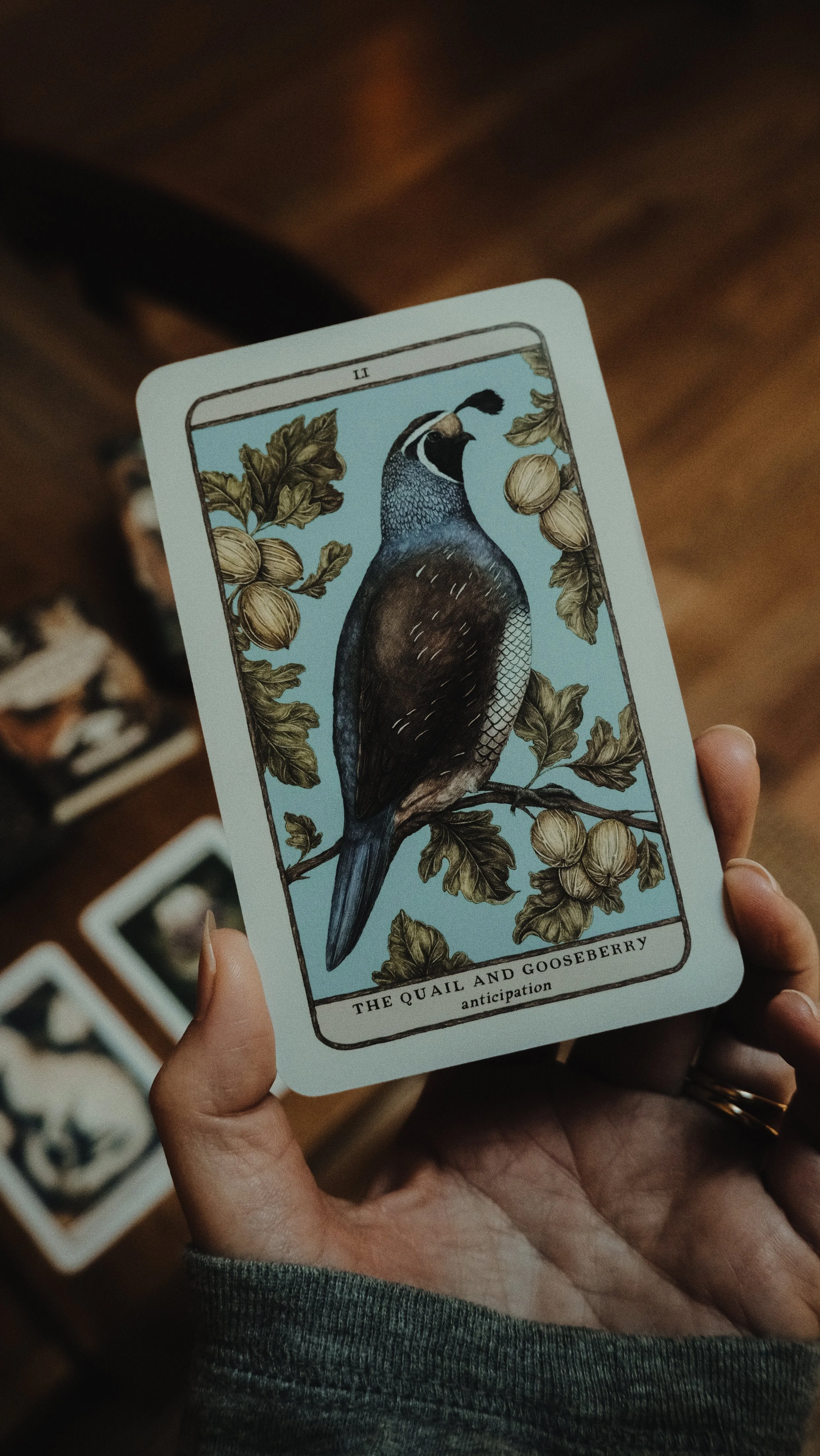
Card: The Quail and Gooseberry.
Through fall and winter, California quail gather in coveys that can number in the dozens, sometimes a couple hundred birds, and roost together in dense shrubs at night. While the covey feeds on the ground, a male will often perch higher up on a fence post or a branch and keep watch, ready to call out the moment something moves. The rest of the flock can eat because one bird is looking up.
That sentry is who needs to hear your thanks. Think about the person who saw something coming before you did, who warned you, checked in on you, or quietly got things ready so you didn't have to. The card says the outcome you've been anticipating is close, which means the watching is almost done, and this is a good moment to tell them that it mattered. And keep a little of that thanks for your own foresight as well. You sensed this ahead of time, and you prepared.
Question 4: What does my body need from these hushed weeks before the holidays begin?
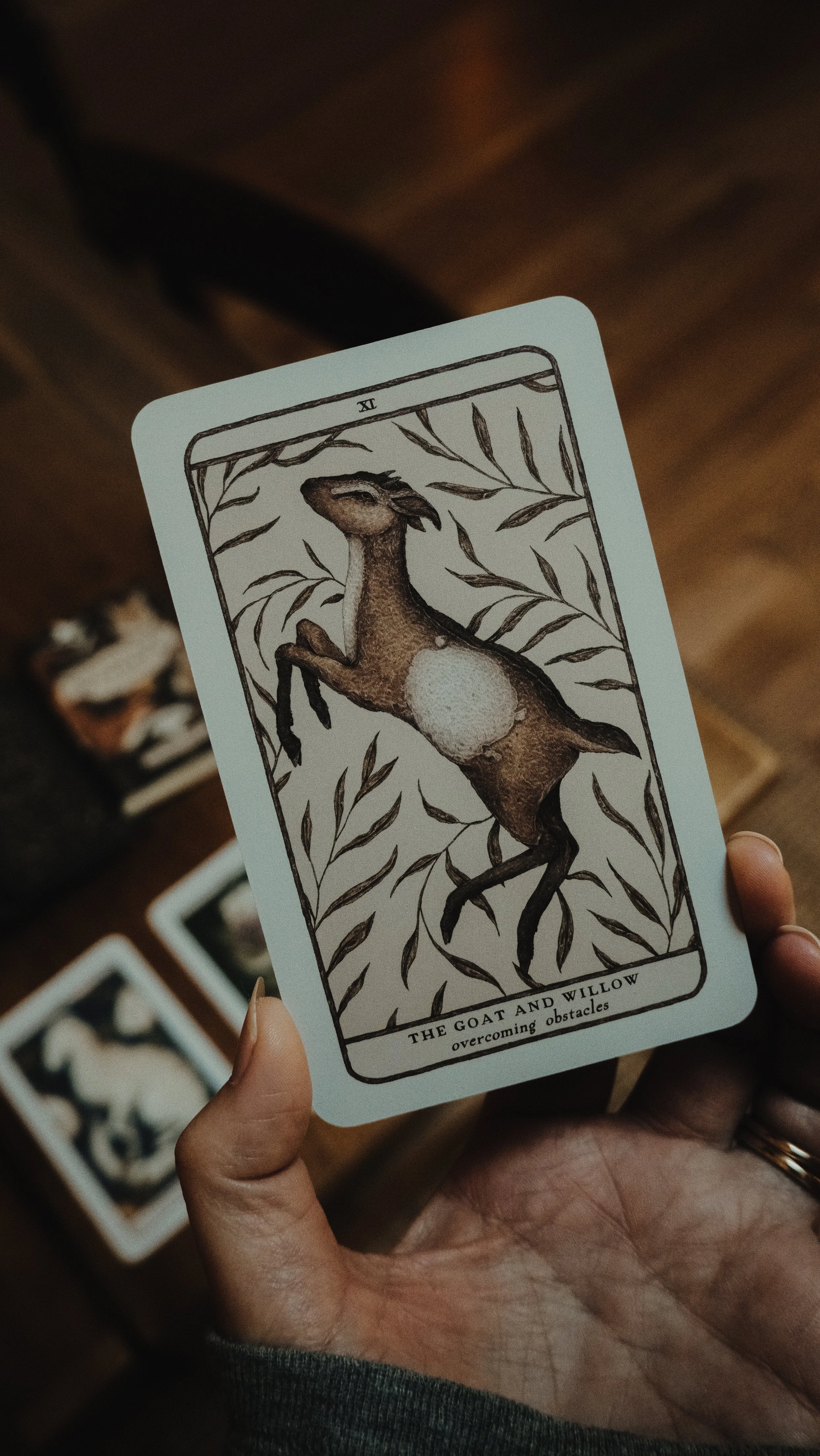
Card: The Goat and Willow.
Willow is one of the most forgiving trees there is. Push a freshly cut willow stick into wet ground in late winter and there's a good chance it will root and leaf out by summer. Gardeners and basket makers have woven living fences and arbors this way for generations. And the goat's famous balance lives in its feet: each hoof is split in two with a soft, grippy pad underneath that lets it hold onto rock.
Your body may be carrying a loss right now, something personal, or simply the year's ending and the light going early every afternoon. The Goat and Willow says to let that be real and give your body what it needs to find its feet again before the holidays ask more of it. That might mean earlier nights, warm meals, slow walks on solid ground, and some time to feel sad without rushing yourself through it. Then come back to what matters to you, and decide how you want December to feel in your body. Like the willow cutting, something that's been cut can root again.
Closing Reflection
Reading these four side by side, I kept noticing how much of this spread is about protection. The hound guarded a baby. The eel and the iris keep themselves safe, one by hiding in the mud and the other by standing tall. The quail watches so its covey can eat in peace, and the goat keeps its balance on ground that would send anyone else tumbling. November seems to be asking who looks after you and who you look after, and whether you’re letting yourself be one of the people you protect. That feels right for a month of short days and long evenings at home.